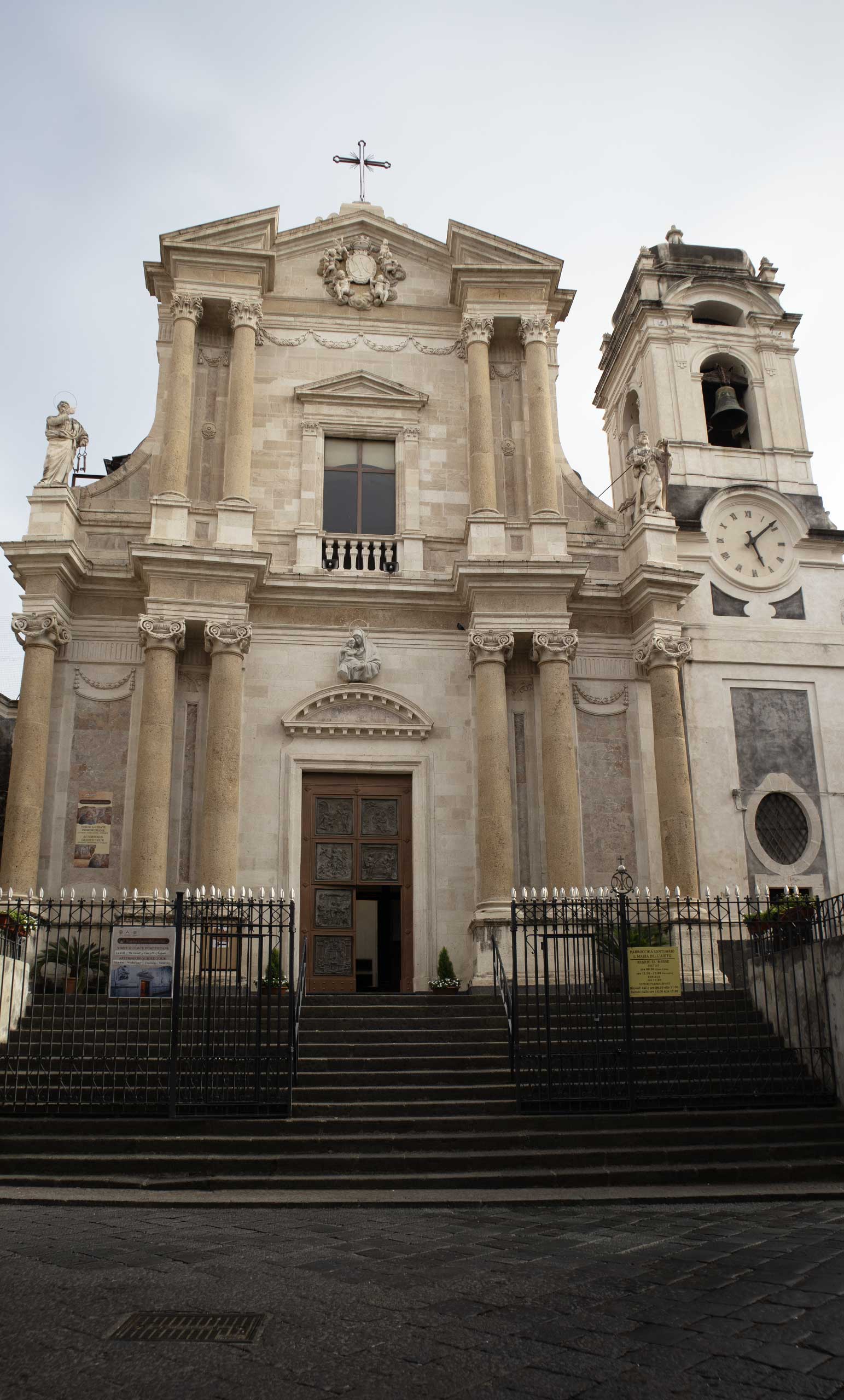

The Church of Santa Maria dell’Aiuto was originally built around 1308 and dedicated to Saints Peter and Paul.
It took on its current name after 3rd November 1641, when the image of the Virgin Mary known as Our Lady of Help, previously venerated in a roadside shrine, was moved inside the church.
Damaged by the earthquake of 1693, it was rebuilt in the early 18th century. From 1796, it served a pastoral function, becoming a parish church only in 1949.
The church façade is preceded by a wide flight of steps and features two rows of fluted columns with Corinthian capitals and decorative festoons. On either side, two limestone statues dedicated to Saints Peter and Paul commemorate the church’s original dedication, whilst the Marian monogram stands out in the centre of the tympanum. A bell tower with a clock was added during the 19th century.
Marian decorations and symbols also appear on the vault of the single nave, which ends in a wide triumphal arch leading into the presbytery.
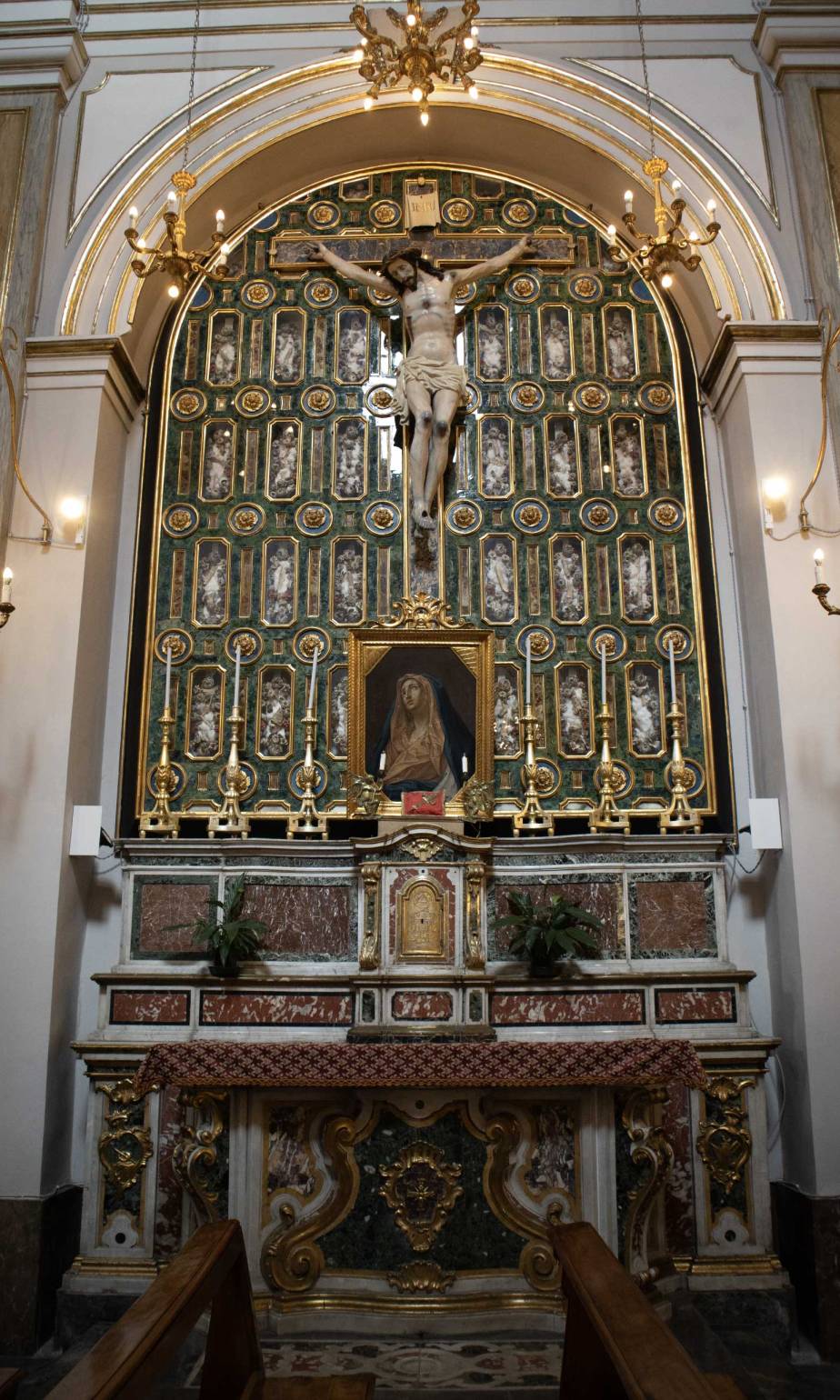
The statue of Santa Maria dell’Aiuto, although altered over time and affected by the damage caused by the earthquake of 1693, still stands on the high altar today. There are also four side altars: one dedicated to the Crucifix; one housing a copy of Paladini’s Martyrdom of Saint Agatha; one containing an 18th-century painting of Saint Francis de Sales; and the last dedicated to Saints Peter and Paul.
There are also four side altars: one dedicated to the Crucifix; one housing a copy of Paladini’s Martyrdom of Saint Agatha; one containing an 18th-century painting of Saint Francis de Sales; and the last dedicated to Saints Peter and Paul.
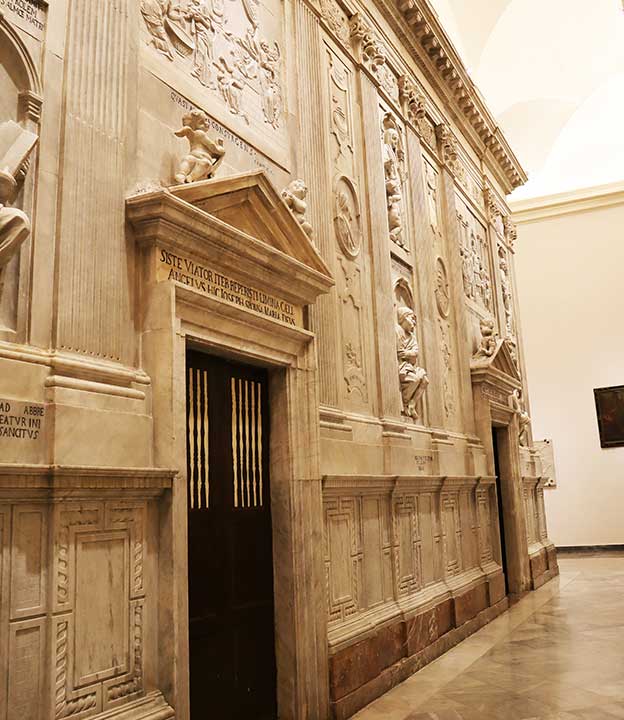
Adjacent to the church stands the House of Loreto, built in 1740 as a faithful copy of the original in both proportion and harmony. It is a rectangular structure, topped by a “dammuso” roof with a “cubbolino” (a type of small stone house with a small dome).
It was commissioned and funded by Canon P.G. Lauria, who had the models for the sculptural decorations made in Loreto, oversaw the surveying of the site, the firing of the bricks and the transport of the materials to the town. The work was carried out by local craftsmen, whilst the sculptures on the east and west façades are the work of Michele Orlando from Palermo. The exterior walls are adorned with marble decorations depicting sibyls, prophets and bas-reliefs inspired by the life of the Virgin Mary.
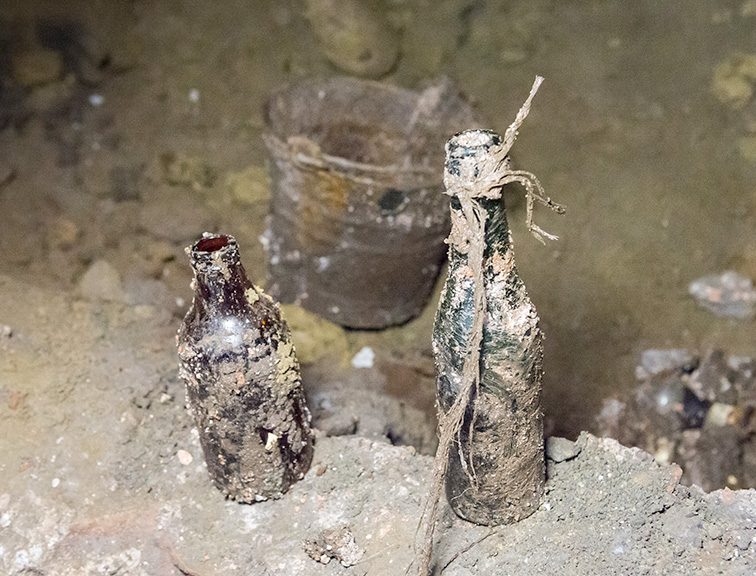
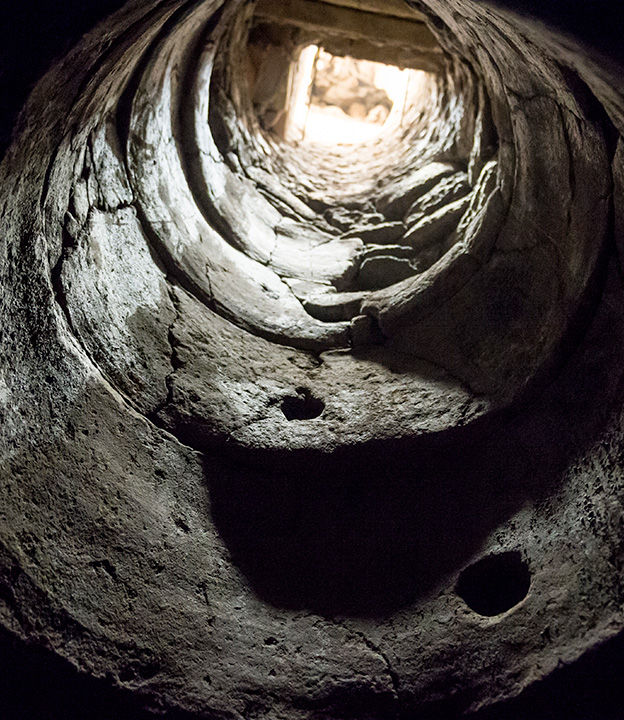
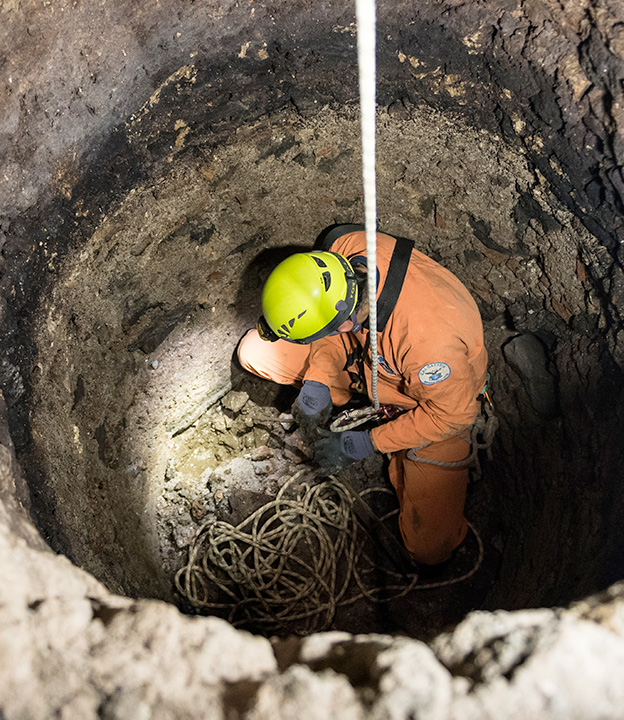
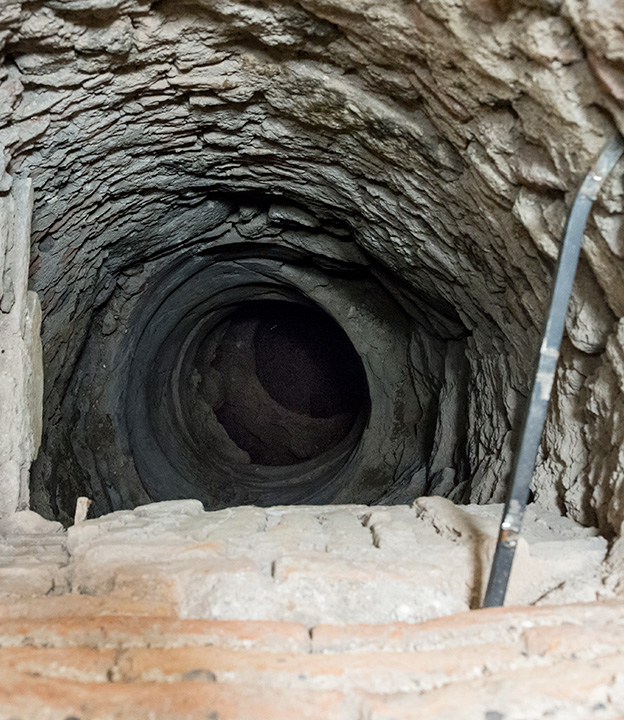
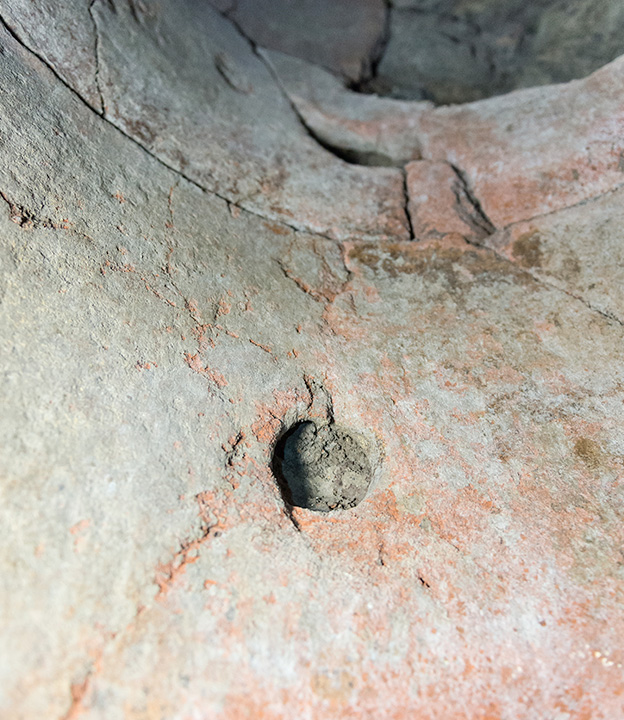
Inside the sanctuary there is an ancient well fed by Catania’s underground river, the Amenano, known as the “twin well” because it was built in parallel with another one located in the adjacent Via Pozzo Mulino. Essential to the Crociferi Fathers in their care of the sick, it survived both the lava flow of 1669 and the earthquake of 1693, and was recovered in 1749 during the construction of the House of Loreto.
Its proximity to the building made it a symbol of devotion. Speleological explorations carried out by the “Gruppo Grotte Catania of the CAI” have revealed its structure. It is 7.10 metres deep, with walls of lava stone. At the bottom of the well, water, buckets, and ancient basins were found.
Photos of the artesian well shot by Serena Nicoletti.
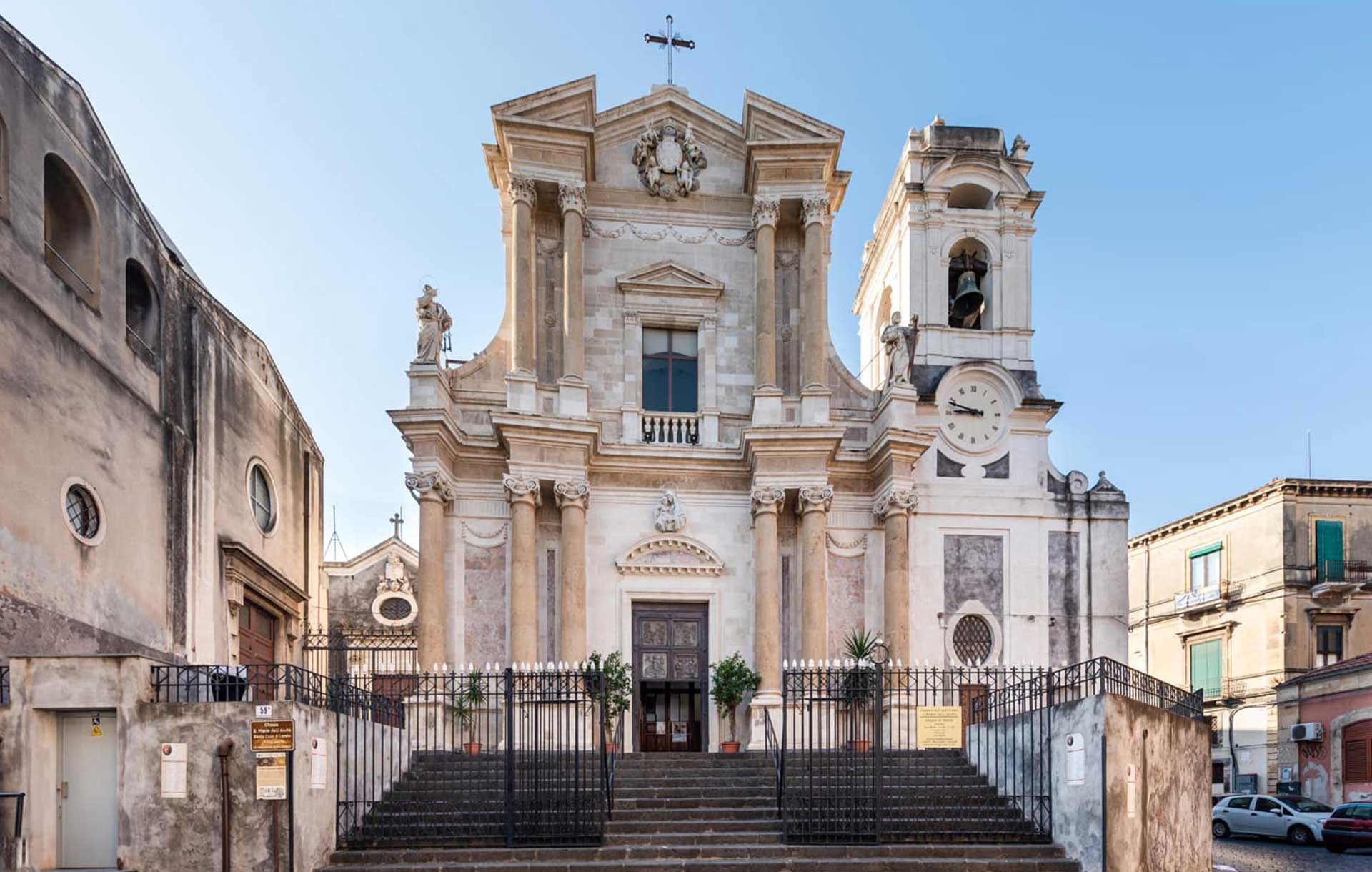
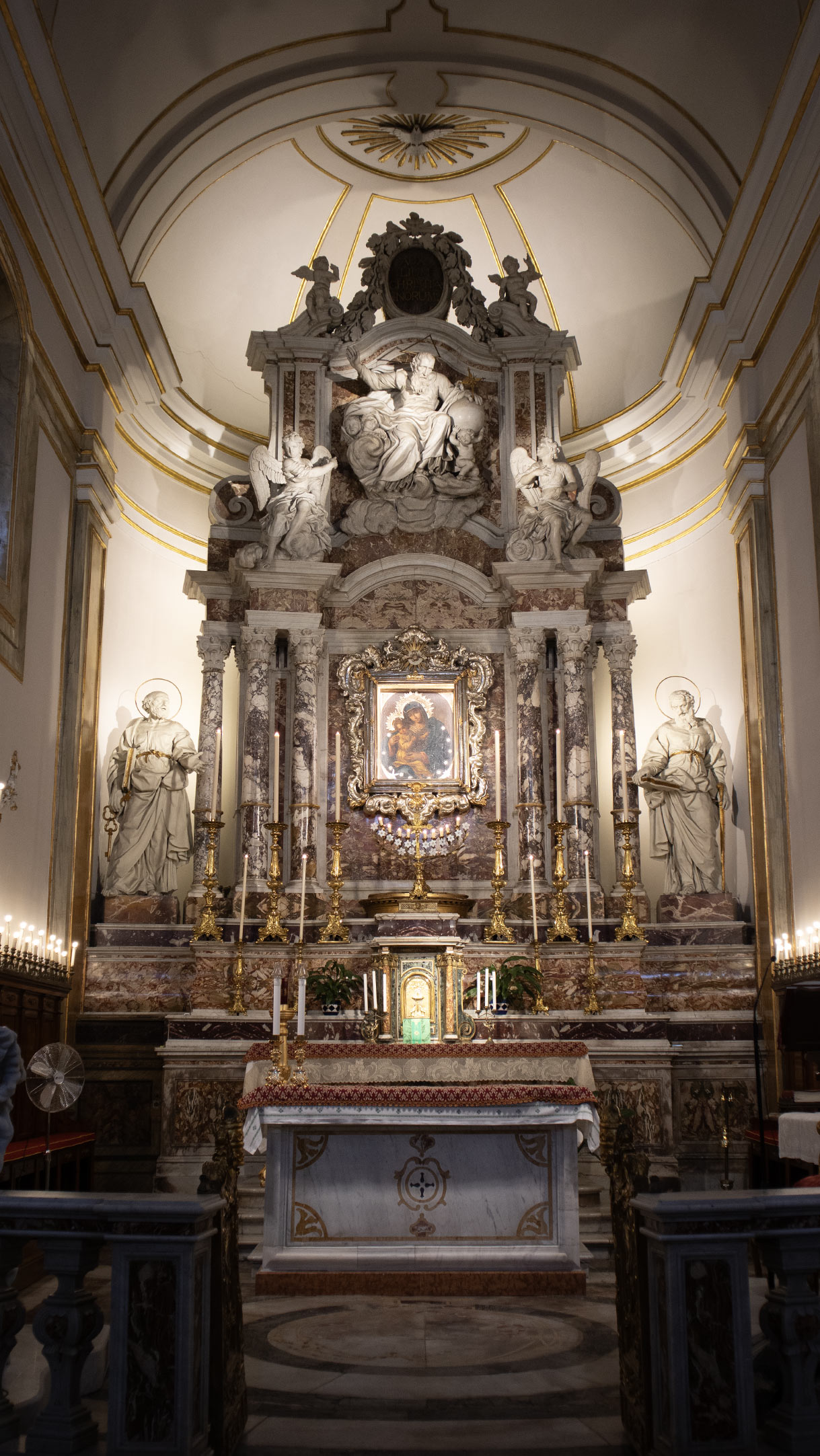

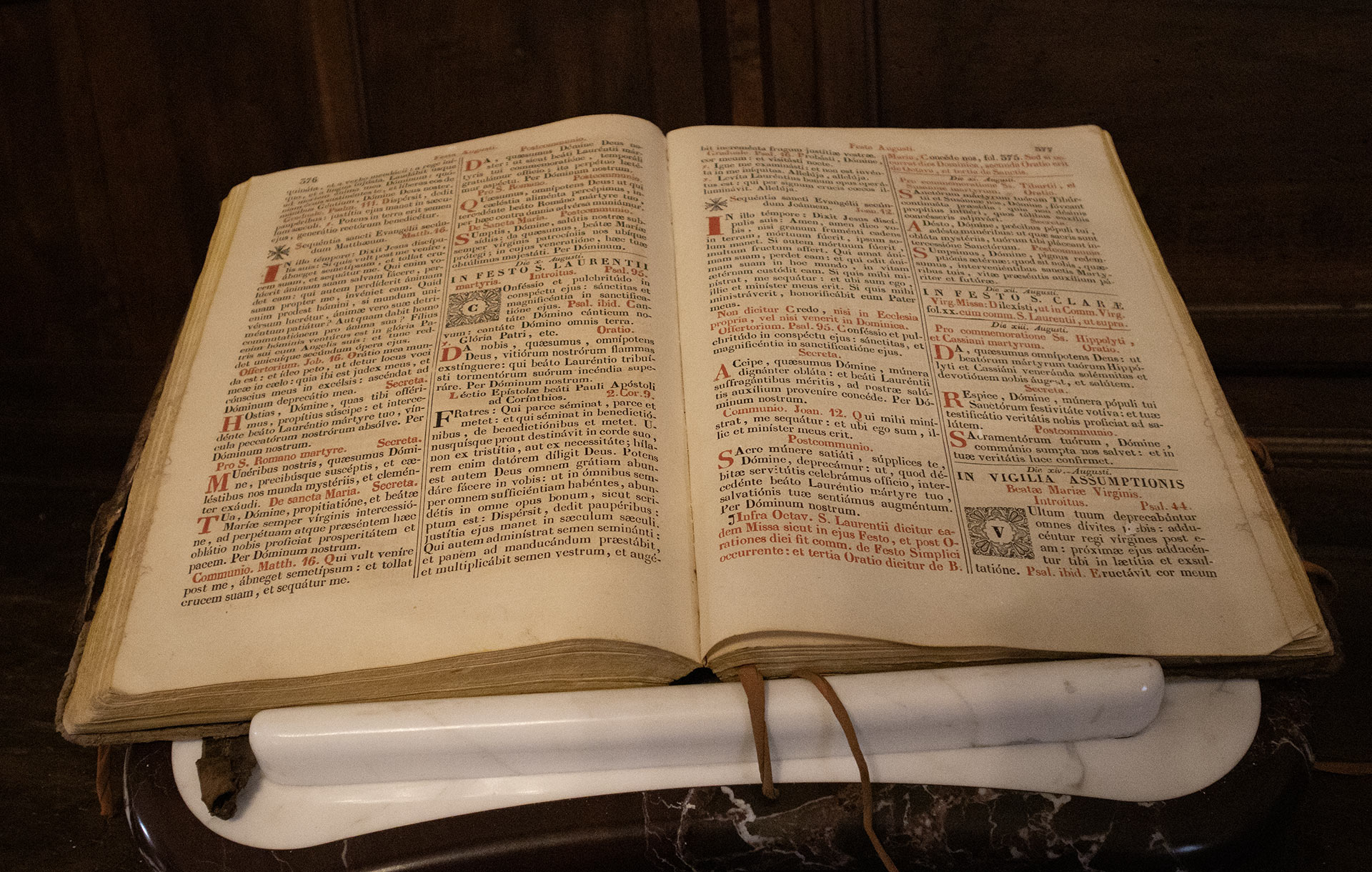
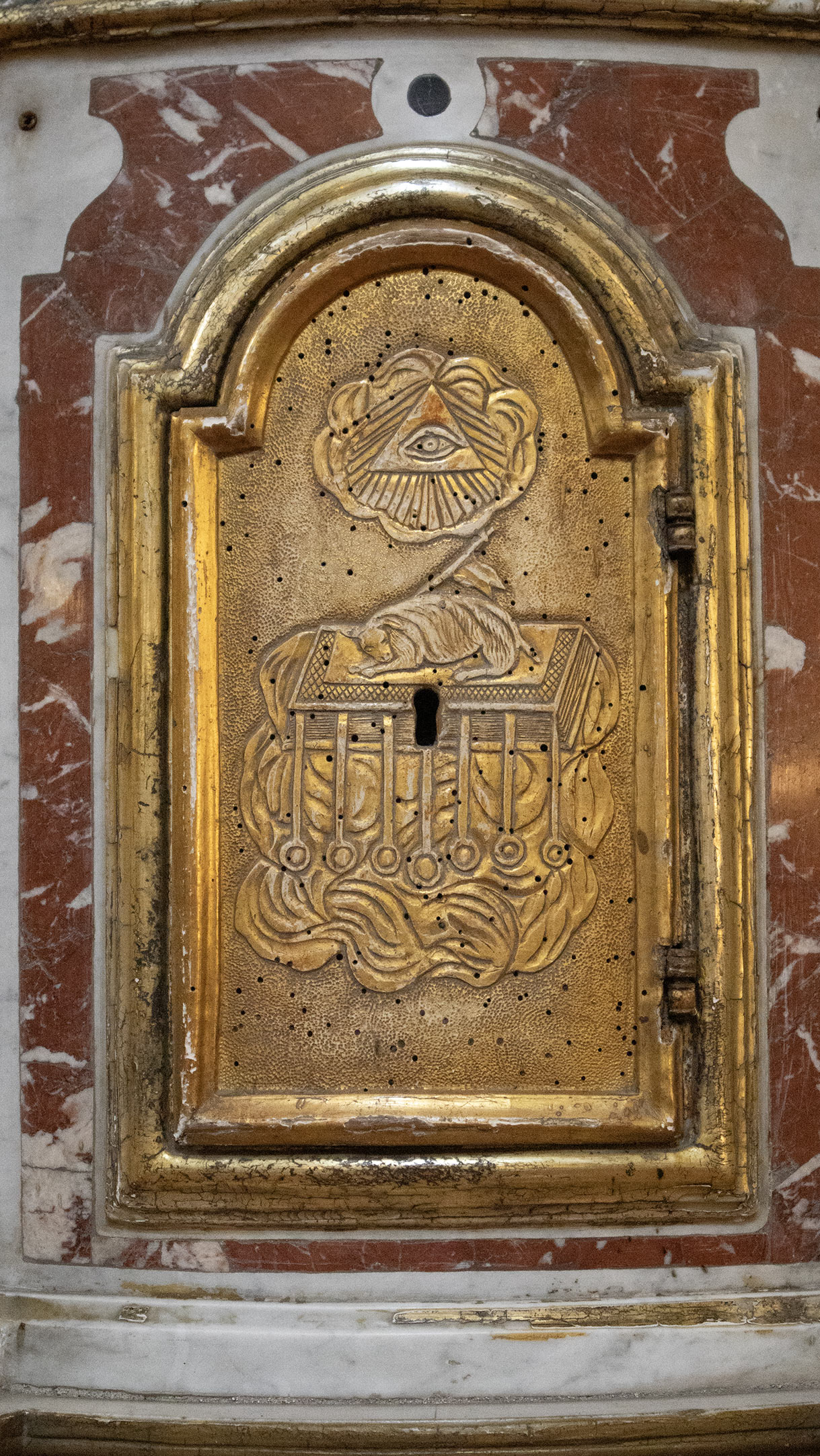
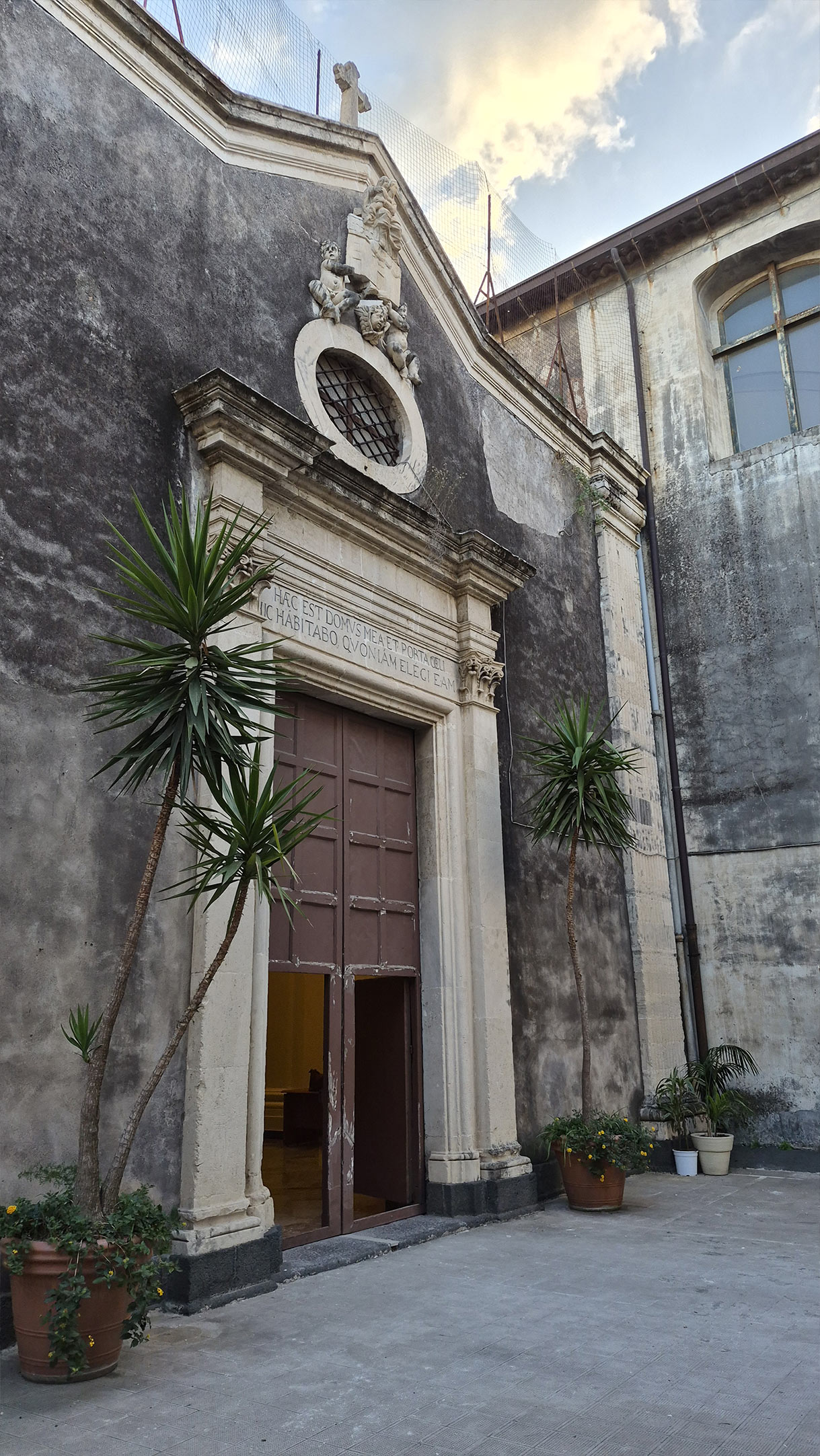
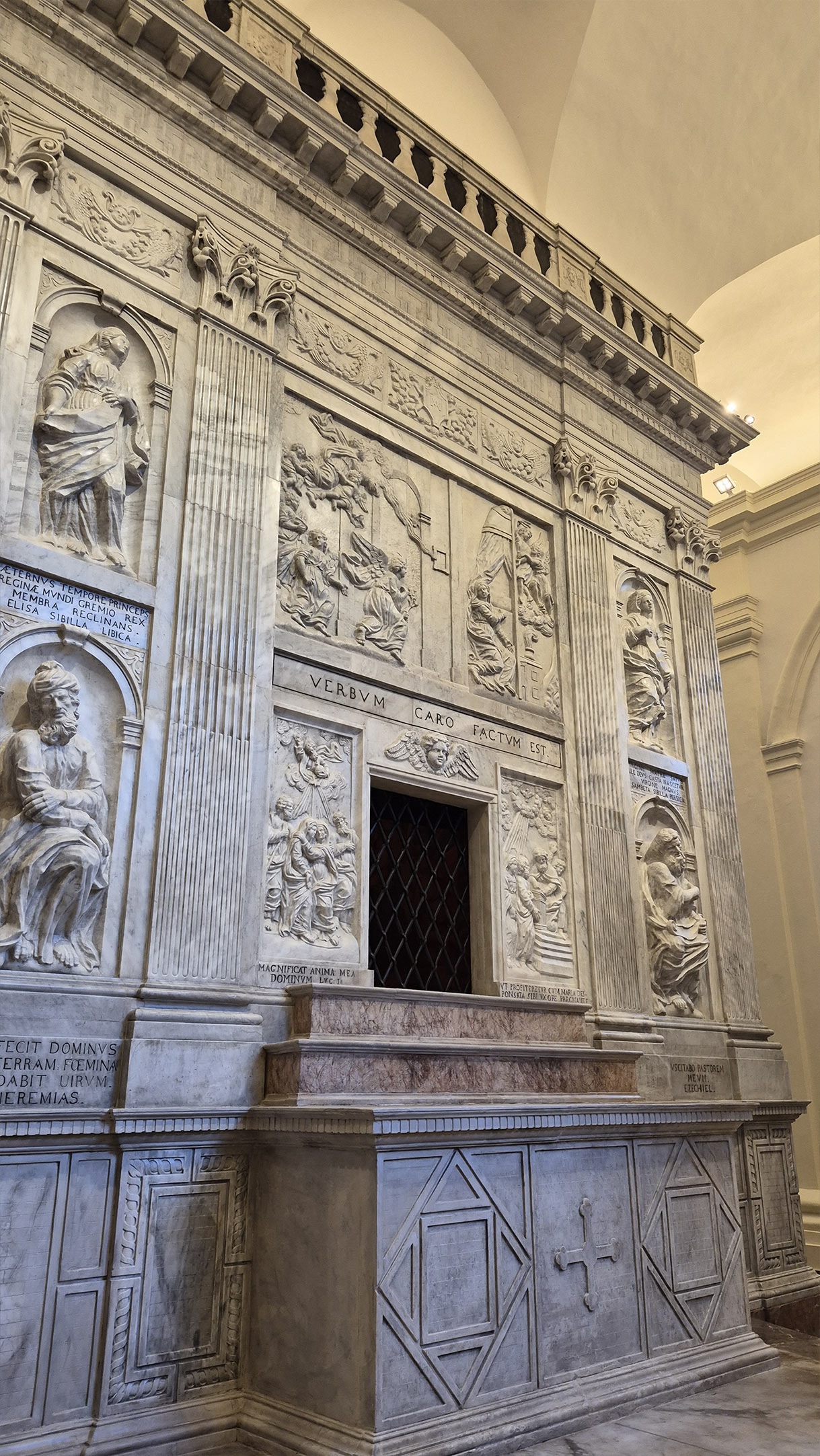

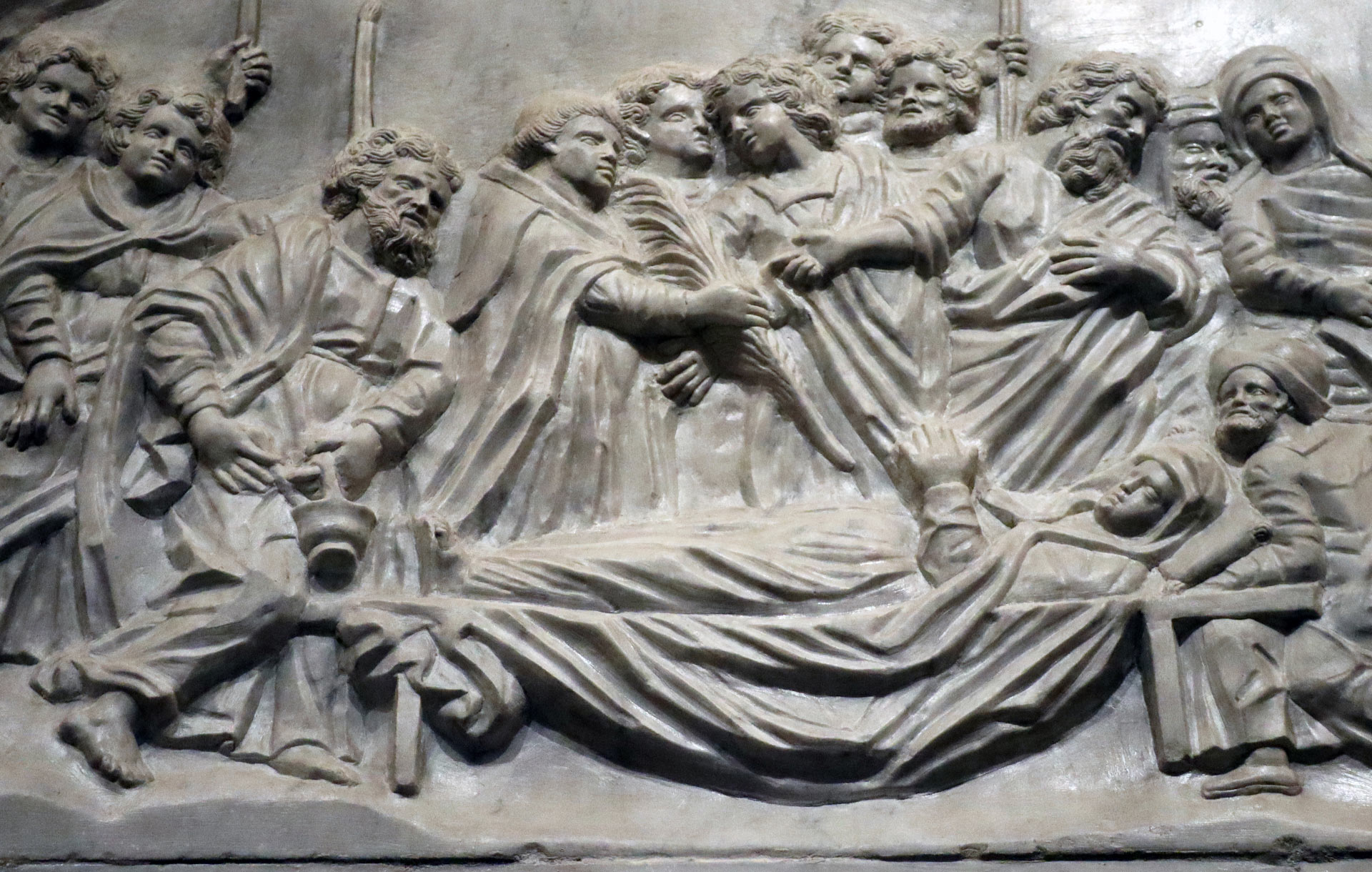
The Church Santa Maria dell’Aiuto and the House of Loreto
Via Consolato della Seta 59, Catania
For information on Mass times:
tel: (+39) 095 345344
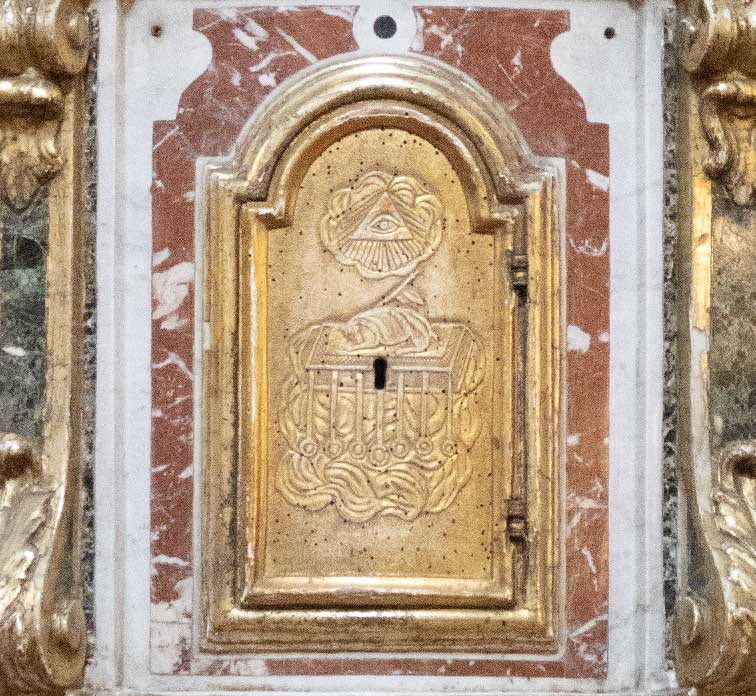
Free entry to the church
————————
Ticket office at the Abbey of Sant’Agata.
Tour of the Abbey Terrace and Dome + Churches of the Holy Trinity, St. Maria dell’Aiuto and House of Loreto and St. Rita. €7.00
————————
For tourist information:
(+39) 327 1352519